
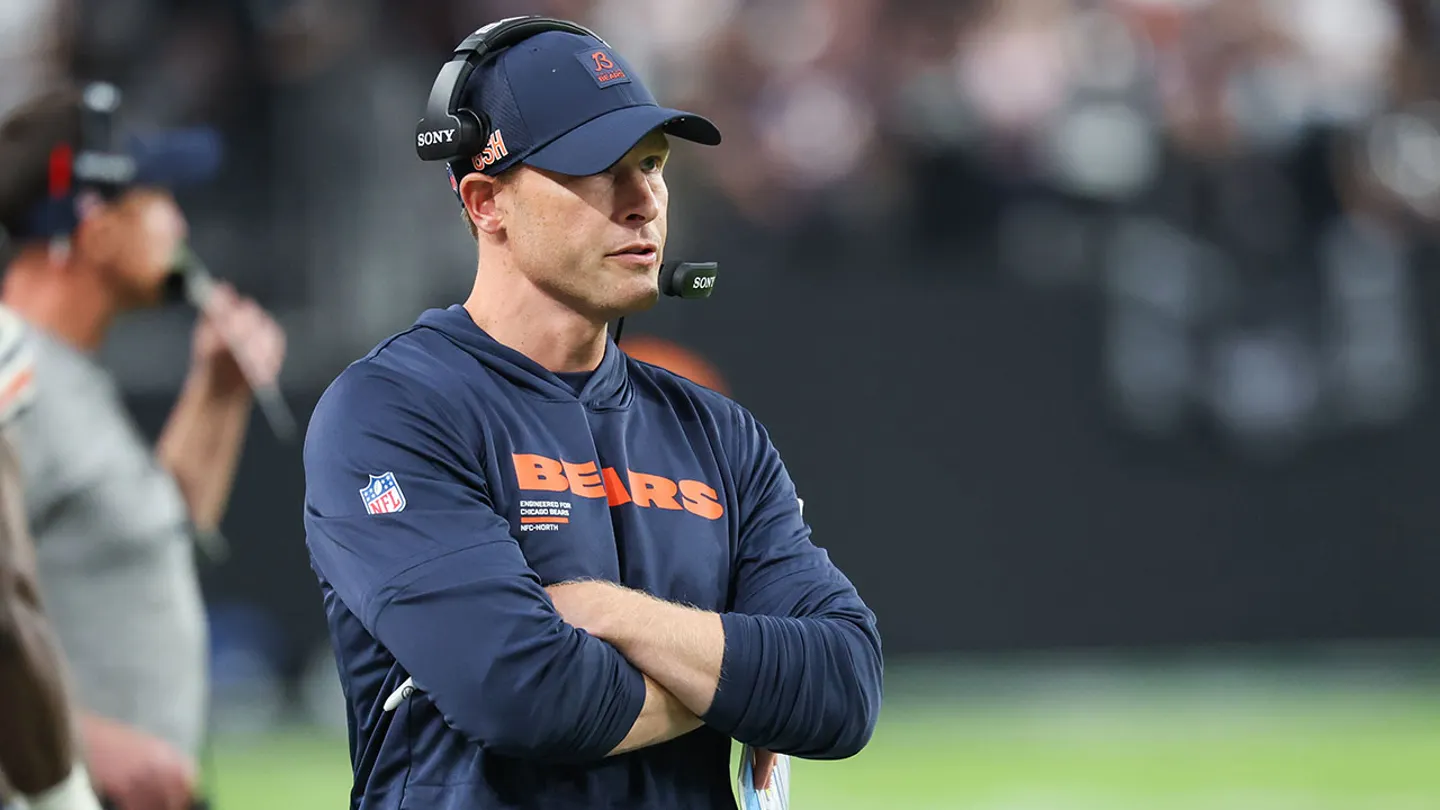
Chicago has been the darling of the NFL offseason. A worst-to-first turnaround, a playoff win for the first time in a decade, a wunderkind head coach getting Coach of the Year buzz, and a fanbase openly dreaming about a Super Bowl push. It’s a great story. It’s also a story built on a foundation shakier than the hype suggests — and even Ben Johnson himself has said as much.
Johnson basically admitted it himself
This isn’t an outside hit job. When Jaguars coach Liam Coen called out the Bears hype this offseason, Johnson’s response wasn’t to bristle — it was to point at his own team and call it the “No. 1 regression candidate” in football. That’s not false modesty. Chicago won seven games last year after trailing in the final two minutes of regulation, and finished second in the league in forced turnovers. Both of those numbers are notoriously unstable year to year, and both tend to snap back toward league average rather than repeat. A coach doesn’t volunteer that kind of admission unless he genuinely believes the tape supports it.
The defense was a mirage built on takeaways
Chicago’s defense led the NFL in takeaways last season, and that number did a lot of heavy lifting in the record. Strip it away and the underlying unit was shaky — the pass rush finished with just 35 sacks in 17 games, 26th in the league, and the run defense wasn’t much better. Montez Sweat can’t generate pressure alone, and the plan for fixing that rests on Austin Booker and Dayo Odeyingbo taking real leaps rather than any proven addition. Worse, two key pieces — cornerback Kyler Gordon and defensive lineman Shemar Turner — are still out and not practicing as camp winds down. A defense that got bailed out by turnover luck last year is heading into 2026 with real questions about its base talent, not fewer.
Caleb Williams’ late-game heroics aren’t a repeatable skill
Williams provided legitimately thrilling finishes last season, and that’s part of what turned this team into a national story. But per NFL analytics expert Warren Sharp, Williams finished 42nd of 46 qualifying quarterbacks in turning dropbacks into sacks or interceptions — and when facing pressure specifically, he ranked 45th of 46. Those are the numbers of a quarterback who was bailed out by talent and moxie in the fourth quarter, not one who was playing clean, sustainable football for 60 minutes. Comeback wins feel great, but building a season-long expectation around replicating them is a bet against the math.
The schedule and division just got a lot harder
Chicago benefited last season from leapfrogging Minnesota, Green Bay, and Detroit in a down year for the NFC North. That’s not repeating in 2026 — by several accounts, the Bears now face the hardest schedule in the league based on last year’s opponent records, in what’s shaping up as the toughest division in football. Winning the division as a surprise upstart is one thing; doing it again as the hunted team everyone circles on their calendar is a completely different challenge.
History isn’t on their side, either
This isn’t unprecedented territory for Chicago specifically. The Bears have had first-place seasons built heavily on late-game wins and opportunistic turnovers before — most notably 13-3 campaigns in 2001 and 2006 — and both were followed by real step-backs. Regression after a turnover- and close-game-fueled breakout has been a recurring pattern for this exact franchise, not just a generic football cliché being applied to them.
The counterargument, fairly stated
None of this means collapse is guaranteed. Johnson’s offensive infrastructure is real — the run game and offensive line performed well in year one, and continuity into year two typically helps young quarterbacks rather than hurts them. If Rome Odunze is fully healthy and Colston Loveland takes the leap many expect in year two of Johnson’s scheme, Chicago’s offense could be good enough to cover for a defense that takes a step back. And it’s fair to note that a first-year coach engineering a playoff win at all is a real accomplishment, regardless of how it happened.
But “the offense might be good enough to overcome a shaky defense and turnover regression” is a very different proposition than the season currently being sold to the public — MVP-caliber quarterback play, Coach of the Year buzz, and a top-seed conversation in the NFC. The gap between that framing and what the underlying numbers actually support is exactly why a comeuppance looks more likely than not. Chicago may still be a good team in 2026. It’s very unlikely to be the team the hype currently describes.
See today's NFL lines on DFS Lines, each one set against the player's last ten games.