
Every NFL season produces a handful of teams that ride some combination of lucky bounces, a soft schedule, and career years into records that look better than the underlying tape. History says the mean always comes calling eventually. Here are the teams most likely to take a step back in 2026.
Los Angeles Rams
It feels strange to put the reigning Super Bowl favorites on this list, but the warning signs are real. Matthew Stafford is 38 and coming off an MVP-caliber year, and aging quarterbacks have a well-documented habit of falling off a cliff rather than declining gradually. Sean McVay used a first-round pick on developmental quarterback Ty Simpson rather than an immediate contributor. Puka Nacua’s offseason legal trouble adds another layer of uncertainty. None of this makes the Rams bad — but running it back at 12-plus wins looks like a tall order.
Baltimore Ravens
Baltimore is favored to win the AFC North again, but there’s plenty of risk priced into that number. Lamar Jackson has now missed multiple games in three of the last five seasons, and durability concerns don’t tend to improve with age for a dual-threat quarterback. Derrick Henry-style workhorse backs (in this case, Baltimore leans on similar power-run infrastructure) age out eventually, and the Ravens are breaking in a new offensive line and a first-time head coach in Jesse Minter. Add a division where Pittsburgh is chronically competitive, Cleveland had a strong draft, and Cincinnati is in win-now mode, and the margin for error shrinks fast.
Jacksonville Jaguars
Jacksonville jumped from 4-13 to 13-4 and a division title in 2025 — the kind of leap that rarely repeats itself. A chunk of that turnaround came from a back-half schedule full of shaky opposing quarterbacks, and the Jaguars now face a first-place slate with far fewer easy outs. Their 2026 draft class has also been graded as one of the weakest in the league, which stings given the big bet already made on Travis Hunter. A tougher AFC South and thinner roster margins make a step back likely.
Philadelphia Eagles
Back-to-back NFC East titles have papered over some real structural issues in Philadelphia. Jalen Hurts is moving to his fifth offensive coordinator in five years, which is not the kind of continuity that tends to produce sustained efficiency, and his production dipped down the stretch last season, culminating in a home playoff loss. Meanwhile, the rest of the division is closing the gap — Dallas has an elite offense, the Giants upgraded at head coach, and a healthy Jayden Daniels puts Washington back in the mix. The cracks may have already started showing late last season.
New England Patriots
New England’s breakout 2025 leaned heavily on a schedule full of bottom-feeder opponents that the Patriots handled decisively. That cushion disappears in 2026, with a slate that includes true road tests against Buffalo, Chicago, Kansas City, Detroit, Jacksonville, the Chargers, and Seattle. Repeating a run built substantially on schedule strength against a much harder slate is one of the toughest asks in football, and it’s fair to expect the record to come back toward the pack even if the underlying roster hasn’t gotten worse.
Denver Broncos
Denver tied for the NFL’s best record at 14-3, but a big share of that came from an eye-popping 12-3 mark in one-score games — the type of split that almost never sustains year over year. The Broncos’ calling card was an elite defense, and defensive performance is notoriously less stable from season to season than offensive performance. Add in some injury risk after Bo Nix had a second procedure on his throwing-side ankle this offseason, and Denver looks like a team that could easily win 10 or 11 games rather than 14 without anything going obviously wrong.
Seattle Seahawks
Seattle’s Super Bowl run was fueled almost entirely by a historically stingy defense that allowed the fewest points per game in football. Advanced models already show that unit’s projected value shrinking significantly heading into 2026, even while it remains the top-rated group in the league on paper. Defenses are simply harder to sustain at an elite level than offenses, and with the Rams viewed by some models as the trendier pick to win the NFC West this time around, Seattle’s ceiling may come down slightly even with most of the roster returning.
Carolina Panthers
Carolina snuck into the playoffs at 8-9 with a scoring margin of roughly minus-70 — one of the worst point differentials of any playoff team in recent memory. The offense ranked near the bottom of the league in scoring, and the wins over the Rams and Packers that punched Carolina’s playoff ticket were more the product of a chaotic conference than a sustainable formula. With a tougher 2026 schedule on tap and no clear signs of a leap at quarterback, the Panthers look like one of the shakier playoff teams to bet on repeating.
Chicago Bears
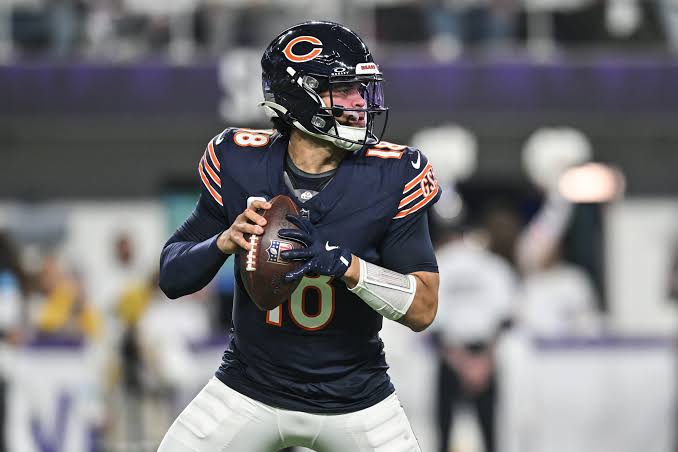
Chicago’s NFC North title looks shakier the closer you look at it. The Bears led the league with a +22 turnover margin — the second-largest differential since 2019 — and went 8-5 in one-score games. Both of those numbers have nowhere to go but toward league average: turnover margin trends back toward zero over time, and close-game win rates trend back toward .500. Strip away the turnover luck and the late-game heroics, and the underlying defense was actually one of the league’s weaker units, ranking 27th in rushing yards allowed, 29th in total defense, and 21st in opponent passer rating. It’s the kind of gap between record and process that tends to close in a hurry, and it’s already shown up in early model-based projections that have Chicago on the outside of the playoff picture for 2026.
The common threads
Looking across this group, four patterns keep showing up: teams that won an unusual number of one-score or close games, teams that rode a turnover margin far outside the norm, teams whose 2025 success leaned on a soft schedule that gets harder in 2026, and teams riding an elite defense or an aging star whose performance is inherently harder to sustain than a good offense with a young quarterback. None of these teams are guaranteed to collapse — but each is carrying real risk that the standings won’t reflect how the roster is actually built.