
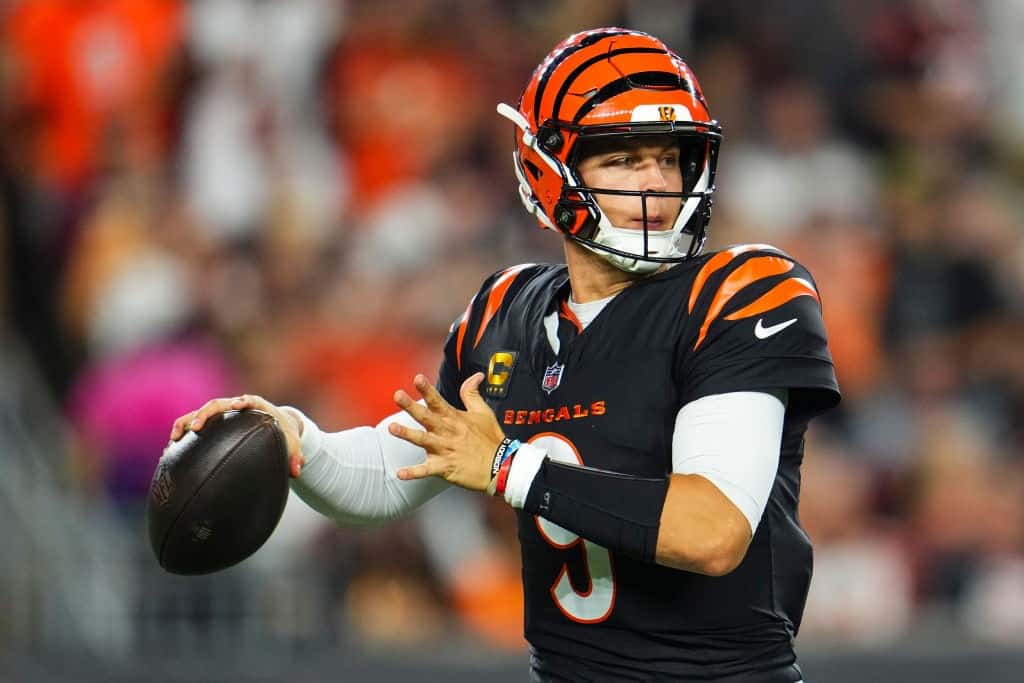
Preseason football looks like real football, but the incentives underneath it are completely different — and that difference matters a lot if you’re putting money on it. Here’s what’s actually going on with preseason lines, how to read them, and what this week’s board looks like.
Why preseason is a different animal
During the regular season, teams are trying to win. During the preseason, they’re mostly trying to evaluate roster spots 40 through 90 and get starters through a handful of reps without anyone getting hurt. That changes everything about how the games play out:
- Starters play limited, unpredictable snaps. A team’s QB1 might play one series, or might not play at all. Coaches often don’t announce this in advance, and plans change gameday-to-gameday.
- Backups and camp bodies see the majority of snaps, especially in the second half, which is why final scores are often much less predictive than they look.
- Game plans are vanilla on purpose. Coaches don’t want to show real schemes on tape for opponents to study, so what you see rarely resembles the regular-season version of that offense or defense.
- Injuries change the depth chart mid-game, and role players who get extra run because of it can post wildly unrepresentative stat lines.
The upshot: lines on preseason games — especially player-based lines — carry much wider error bars than a Week 8 line would, in both directions.
The kind of “betting” on the board this week
The site you linked, iBET Networks, isn’t a traditional sportsbook offering point spreads or moneylines — it’s a daily fantasy pick’em product. You pick a number of players (2–6) and predict whether each will go over or under a projected stat line; there’s no spread or total on the actual score of the game. That’s a meaningfully different product from traditional sports betting — it’s regulated and structured as fantasy sports contests in most states, and the legal landscape around it varies by state, so it’s worth knowing what you’re actually opting into before you play.
Here’s a sample of the player prop lines currently posted for this week’s preseason slate:
| Player | Team | Opponent | Line | Stat |
|---|---|---|---|---|
| Jake Bates | DET | vs CIN | 1.5 | XP Made |
| Skyy Moore | GB | vs PIT | 17.5 | Receiving Yards |
| Joe Burrow | CIN | vs DET | 53.5 | Pass Yards |
| Xavier Weaver | ARI | vs LV | 26.5 | Receiving Yards |
| Lewis Bond | HOU | vs LAC | 24.5 | Receiving Yards |
| Tre Harris | LAC | vs HOU | 16.5 | Receiving Yards |
| KeAndre Lambert-Smith | LAC | vs HOU | 24.5 | Receiving Yards |
| Malik Benson | LV | vs ARI | 25.5 | Receiving Yards |
| Cam Ward | TEN | vs SF | 44.5 | Pass Yards |
| Nick Folk | ATL | vs DEN | 1.5 | XP Made |
How to actually read these lines
A few things worth noticing just from this board:
- Joe Burrow’s line is set at 53.5 passing yards. That’s an extremely low number for a starting NFL quarterback — a sign the line-setters expect him to play one drive, maybe two, before getting pulled. The question isn’t “is Burrow good,” it’s “how many total dropbacks will he actually get.”
- Cam Ward’s line is set higher, at 44.5. As a second-year quarterback still auditioning for a bigger role, he may see more extended run than a veteran starter like Burrow would in the same exact game state.
- The receiving-yardage lines (Moore, Weaver, Bond, Harris, Lambert-Smith, Benson) are for players who are mostly depth-chart or roster-bubble names, not established starters. That’s typical for preseason — the players who see the most snaps, and therefore have the most predictable lines, tend to be the ones fighting for a roster spot, not the stars.
- Kicker extra-point lines (Bates, Folk at 1.5) are really a proxy bet on how many touchdowns the offense scores in limited snaps — not a bet on kicker skill at all.
The common denominator: almost every one of these lines is really a bet on playing time, not performance. If you don’t have a strong read on how many snaps a specific player is going to get — which even beat reporters often don’t know until right before kickoff — you’re guessing on the most important variable in the equation.
If you’re going to play anyway
- Check the latest beat-writer reports before kickoff, not the day before. Snap-count plans for preseason games 3 often change right up to gametime, and starters get scratched from playing altogether more often than in the regular season.
- Favor role certainty over talent. A backup who’s locked into 30+ snaps is more predictable than a starter who might play six offensive plays.
- Treat parlays and multi-player entries as higher variance, not higher value. Stacking several uncertain snap-count bets together compounds the uncertainty rather than diversifying it — each additional leg you add lowers your odds of cashing, even though the payout grows.
- Set a hard budget before you start and stick to it. Preseason is one of the lowest-information windows of the year to bet on, so treat any money here as entertainment spend, not an edge you’ve found.
If you ever feel like betting is becoming a problem — chasing losses, spending more than you planned, or thinking about it outside of when you’re actually playing — the National Council on Problem Gambling helpline (1-800-522-4700) is free, confidential, and available anytime.
See today's NFL lines on DFS Lines, each one set against the player's last ten games.