
Opening weekend is usually the worst place in the sport to learn anything. Half the schedule is a tune-up, the other half is a coaching staff hiding its playbook, and everyone overreacts to a blowout of an overmatched opponent. This one was different. Between Thursday night and Sunday evening, the 2026 season handed out real information — and the loudest of it came from the wide receiver position.
Malachi Toney Erased a 42-Year-Old Miami Record
Miami’s Malachi Toney put up 234 receiving yards and three touchdowns in the Hurricanes’ 45-6 win at Stanford on Friday night, breaking Eddie Brown’s single-game program record of 220 yards that had stood since 1984. That is not a stat-padding line against a Group of Five defense in the fourth quarter. Toney was the entire reason Stanford’s coverage plan collapsed, and Miami kept feeding him because nothing in the Cardinal secondary could handle him one-on-one.
The Toney number matters for a specific reason: it came with a new quarterback. Darian Mensah, in his first game after transferring in from Duke, cleared 400 passing yards with five touchdown throws. Miami replaced a starting quarterback and got a better version of its passing offense immediately. That combination — an established alpha receiver plus a quarterback who trusts him into tight windows — is the profile that travels into ACC play, and it is why Miami’s October schedule suddenly looks a lot more navigable than it did in August.
Jeremiah Smith Needed One Half
Ohio State beat Ball State 56-3, which tells you nothing. Jeremiah Smith’s line tells you plenty: eight catches for 151 yards and two touchdowns, all of it in the first half, before Ryan Day pulled the plug on the starters. Julian Sayin did not need to do anything difficult to produce that, which is precisely the point. Smith remains the most unfair individual matchup in the sport, and the only thing standing between him and another monster season is whether defenses are willing to commit two defenders to him and live with what happens elsewhere.
Texas gets first crack at answering that on Saturday. Keep an eye on how the Longhorns align pre-snap: if they play Smith with a corner and a capped safety on early downs, Ohio State’s secondary options become the story of the game.
The Quarterback Turnover Paid Off Almost Everywhere
This was the offseason of the transfer-portal and true-freshman quarterback, and the first returns were unusually clean.
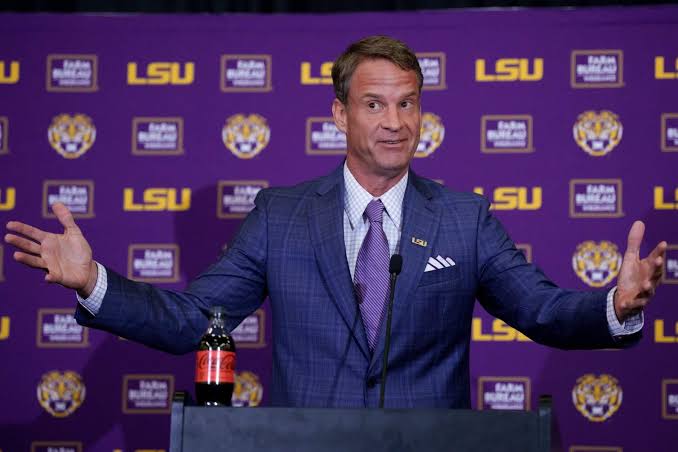
- Sam Leavitt, LSU: Lane Kiffin’s debut in Baton Rouge ended 51-10 over Clemson. Leavitt topped 100 rushing yards himself, and running back Dillin Jones added 113 yards and two scores. An offense with two 100-yard rushers and a quarterback who can throw is a problem the SEC has to solve in a hurry.
- Trinidad Chambliss, Ole Miss: More than 300 passing yards and three touchdowns in a 41-38 win over No. 24 Louisville in Nashville, decided by Lucas Carneiro’s 48-yard field goal as time expired. New target Deuce Alexander went for 159 yards and two touchdowns in his first start for the Rebels.
- Keelon Russell, Alabama: The most quietly impressive line of the weekend. Russell went 18 of 30 for 256 yards with no touchdowns and no interceptions, then added 86 yards and a score on the ground in a 48-10 win over East Carolina. His 342 total yards are the second-most by an Alabama quarterback in a starting debut, behind only Bryce Young’s 343. Zero turnovers from a first-time starter is the number that should encourage Tuscaloosa most.
- Faizon Brandon, Tennessee: Five touchdowns in his debut against Furman. The competition was what it was, but a true freshman running an SEC offense that cleanly in game one is not nothing.
The pattern worth tracking: the quarterbacks who arrived with an established No. 1 receiver already in the building — Mensah with Toney, Chambliss with Alexander — looked settled from the first drive. The ones asked to build chemistry from scratch mostly did not throw for volume. That is a useful filter for the next month of college fantasy and devy evaluation.
Three Programs That Left Opening Weekend Worse Off
Clemson. The 51-10 scoreline undersells it. Clemson’s offense could not stay on the field, could not run the ball, and rotated quarterbacks without finding an answer. Dabo Swinney has weathered slow starts before, but this was a total-systems failure against a team that had just installed a new coaching staff. The schedule does not soften soon.
Oklahoma State. Eric Morris took over a roster with more than 90 new additions and lost his debut 24-10 to Tulsa. Roster churn on that scale takes time, but losing an in-state game to an American Conference opponent in week one is the sort of result that makes a rebuild feel longer than it is. Oregon comes to Stillwater on Saturday.
Rutgers. UMass had lost 16 straight games. That streak ended in Piscataway on Thursday night, 37-21. There is no context that makes that acceptable for a Big Ten program, and Rutgers now carries it into conference play.
What Week 2 Actually Asks
Saturday, September 12 is the best nonconference day on the calendar, and it is stacked front to back:
- Ohio State at Texas, 7:30 p.m. ET on ABC. The rematch, in prime time, in Austin. Ohio State’s offense has not been tested; Texas’s front is the test.
- Oklahoma at Michigan, noon ET on FOX. A road opener against a top-tier defense is the fastest way to find out whether Oklahoma’s offensive line is fixed.
- Oregon at Oklahoma State, noon ET on ESPN. Oregon should win comfortably. If it does not, the Ducks have a problem, and if it is ugly early, Stillwater’s rebuild timeline gets rewritten again.
The through-line from Week 1 into Week 2 is simple: the teams that already had a proven receiver did not have to wait for their offense to come together, and the teams still searching for one spent Saturday punting. Watch which side of that line each of Saturday’s contenders falls on. It has been the best early-season predictor for three straight years, and week one did nothing to break the pattern.