
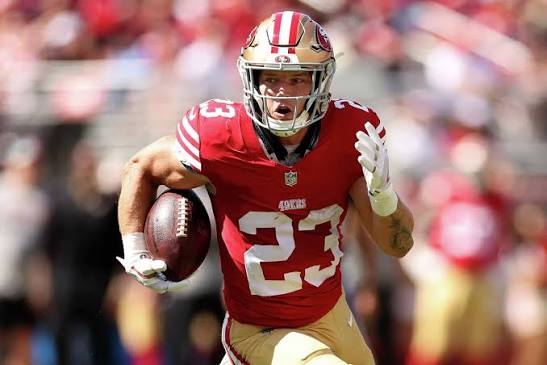
Running back remains the position where volume, health, and offensive context matter more than anywhere else in fantasy. This year’s group features two clear-cut elites on top, an unusually deep second tier loaded with legitimate weekly RB1 upside, and several buy-low candidates coming off injury-shortened rookie seasons who could reshape the board by midseason. Here’s the full top 20.
1. Jahmyr Gibbs, Detroit Lions
Gibbs versus Bijan Robinson for the top spot is one of the closest calls at the position, but Gibbs gets the nod on pure upside. He’s coming off back-to-back top-three fantasy finishes while sharing a backfield — and with David Montgomery now in Houston, he’s no longer sharing one. Detroit’s offense has a case as the league’s most potent, and Gibbs sits at the center of it.
2. Bijan Robinson, Atlanta Falcons
Robinson is already an elite, three-down weapon, and the departure of Tyler Allgeier clears out any remaining competition for goal-line work. A 100-reception season is squarely in his range of outcomes. The lone drag on his profile is Atlanta’s quarterback situation, which caps the offense’s overall ceiling relative to Detroit’s.
3. Christian McCaffrey, San Francisco 49ers
McCaffrey turned 30 in June, and the drop-off for backs at that age can be sudden. Still, his receiving ability alone keeps him in the conversation for the position’s top scorer, and San Francisco has shown no real plan B if he stays on the field.
4. Jonathan Taylor, Indianapolis Colts
Taylor has legitimate No. 1 overall running back upside, but there’s real hesitation tied to the uncertainty around Daniel Jones’ recovery timeline from a season-ending Achilles injury. Indianapolis’s second-half collapse last year started well before that injury, which adds another layer of caution.
5. James Cook, Buffalo Bills
Cook remains one of the most efficient backs in the league in an offense that puts him in scoring position constantly. He’s a low-variance floor play with real ceiling attached given Buffalo’s overall offensive strength.
6. De’Von Achane, Miami Dolphins
There’s real risk here as Achane adjusts to a new offense led by Malik Willis, who will vulture rushing production with his legs, and a supporting cast that’s thinner than in year’s past. But Achane’s explosiveness with the ball in his hands is too dangerous to push him much further down the board.
7. Ashton Jeanty, Las Vegas Raiders
Jeanty’s rookie season didn’t live up to the hype, but a new coaching staff under Klint Kubiak has signaled intent to feed him heavily in a system built around his skill set. A Year 2 breakout is very much in play.
8. Chase Brown, Cincinnati Bengals
Brown enters the season as a clear lead back in a Bengals offense that should be productive when healthy, giving him a strong floor with real ceiling if touchdown regression breaks his way.
9. Derrick Henry, Baltimore Ravens
Henry defies typical aging curves for power backs, and while it’s fair to say we may have seen his absolute peak, he remains a freak athlete capable of low-end RB1 production even in his age-32 season.
10. Omarion Hampton, Los Angeles Chargers
If Hampton and the Chargers’ offensive line can stay healthy, a Year 2 breakout looks easy to project. He enters the season as the unquestioned lead option in a run-focused scheme.
11. Saquon Barkley, Philadelphia Eagles
Like Henry, Barkley is likely past his statistical peak, but he’s shown he can still push off decline for at least another year. He remains a safe, high-floor RB1 investment even if the truly explosive seasons are behind him.
12. Kenneth Walker III, Kansas City Chiefs
The buzz building around Walker in his new home is real. Kansas City has lacked a true difference-maker at running back for a while, and while Andy Reid rarely hands out a traditional bell-cow workload, Walker should see enough volume and scoring opportunity to justify this range.
13. Kyren Williams, Los Angeles Rams
Williams isn’t flashy, but he’s been a top-10 running back in fantasy points per game for three consecutive seasons. For managers who value consistency over ceiling, he’s one of the safer picks at the position.
14. Breece Hall, New York Jets
Hall retains three-down ability and real receiving-game equity in an offense that should lean on the run. The talent has never been the question — it’s about whether the surrounding offense creates enough opportunities.
15. Javonte Williams, Dallas Cowboys
Williams settled into a workhorse role and should carry that volume into 2026, giving him a solid floor even if his per-touch efficiency doesn’t stand out.
16. Jeremiyah Love, New Orleans Saints
Love has rare talent, but there’s a real risk of the same trap that caught Ashton Jeanty last year: massive individual expectations for a rookie on a struggling offense. Paying an RB1 price feels rich, but as a high-upside RB2, he’s an easy target.
17. Josh Jacobs, Green Bay Packers
Jacobs’ fantasy outlook carries real uncertainty tied to an ongoing legal matter stemming from a May arrest. Absent clarity, he’s a harder player to plan around than his talent level would otherwise suggest.
18. Cam Skattebo, New York Giants
Skattebo was producing like a fantasy RB1 in the six weeks before a gruesome ankle injury ended his rookie season, and he’s stated he won’t change his physical running style at all in his return. The talent and role are exciting, but banking on a full season of RB1 value off a severe injury requires some caution.
19. Travis Etienne, Jacksonville Jaguars
Etienne remains a productive every-down option in an offense that’s shown steady improvement, giving him a reliable floor with upside if touchdown opportunities trend his way.
20. Quinshon Judkins, Cleveland Browns
Optimism is building around Judkins after a promising rookie season cut short by an ankle injury and fractured fibula. Cleveland’s offense overall isn’t an exciting bet, but as the presumptive lead back, Judkins carries real RB2 appeal with spike-week upside.
The bigger picture
The gap between the top two backs and the rest of the field is real, but this year’s RB2 tier — from roughly Cook through Walker — is deeper and more legitimate than in recent years, which strengthens the case for prioritizing wide receiver early and still landing a quality starter at running back in the third or fourth round. The names worth watching closest as camps progress are the injury-recovery cases — Skattebo, Judkins, and Jonathan Taylor’s supporting cast — since any one of them locking down a full workload could shoot up draft boards fast.
See today's NFL lines on DFS Lines, each one set against the player's last ten games.