
Every year, a handful of receivers going in the double-digit rounds turn into weekly must-starts, while the obvious names get drafted early and rarely move the needle for a fantasy title. Last season alone, Michael Wilson, Wan’Dale Robinson, Alec Pierce, Parker Washington and Keenan Allen all outperformed their draft cost by a wide margin. Here are 10 receivers with real paths to a similar outlier-type season in 2026.
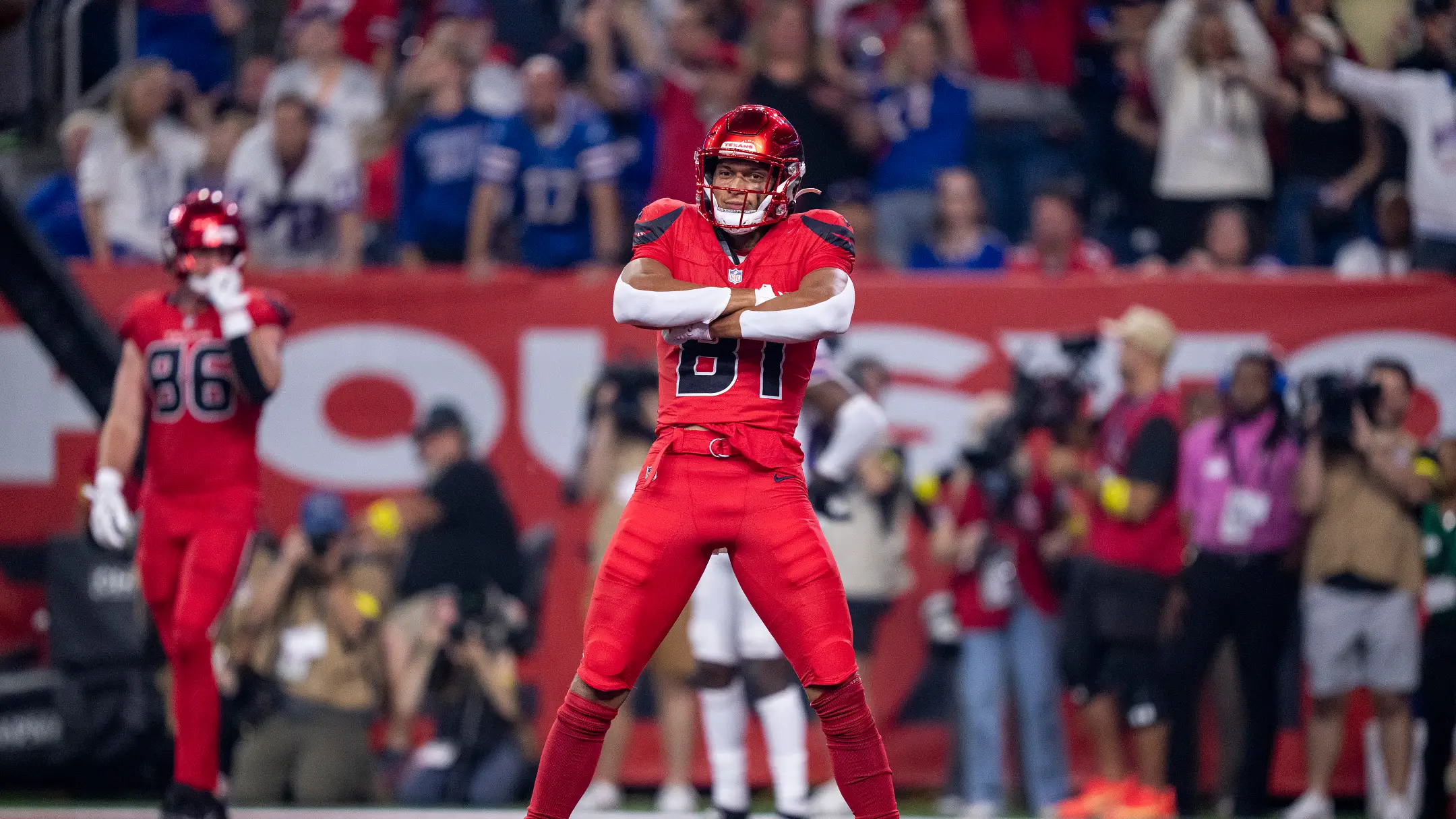
Jayden Higgins, Houston Texans
Higgins quietly turned into one of the more productive receivers in football over the second half of last season, posting seven weeks as a WR3-or-better finisher from Weeks 8 through 18. Among 119 qualifying receivers over that stretch, he ranked 24th in target rate per route run and 28th in yards per route run. If C.J. Stroud gets back to even league-average passing, Higgins projects as a weekly flex-or-better option, and he carries extra contingent upside if Nico Collins — who’s missed time in every season of his career — goes down.
Jordyn Tyson, New Orleans Saints
New Orleans took Tyson eighth overall in this year’s draft, giving him a clear runway to immediate playing time opposite Chris Olave. He caught 61 passes for 711 yards and eight touchdowns in an injury-shortened final college season after topping 1,100 yards the year before. Fantasy managers are pricing in some rookie-receiver skepticism, which is exactly what makes him a value at his current WR37-range cost in PPR formats.
Xavier Worthy, Kansas City Chiefs
A healthy shoulder and a clearer path to opportunity could position Worthy to lead Kansas City’s receiving corps in 2026. His game-breaking speed was never in question as a rookie; what limited him was availability and target competition, both of which look improved heading into this season.
Rashid Shaheed, New Orleans Saints
Shaheed went from undrafted rookie to All-Pro returner and has seen his offensive role grow every year since. He played more than half of New Orleans’ snaps last season and turned into a legitimate deep threat, posting six games of 60-plus receiving yards. A full season of expanded usage in Kellen Moore’s offense gives him real weekly upside beyond the big-play spikes he’s already shown.
Josh Downs, Indianapolis Colts
Downs has spent his first three seasons as Indianapolis’s highly efficient slot receiver, and with Daniel Jones’ return under center after a strong debut season with the Colts, there’s a clear path for that efficiency to translate into more consistent weekly volume. He’s exactly the kind of proven-role, undervalued piece that tends to outperform his draft slot.
Zachariah Branch, Atlanta Falcons
Branch enters Atlanta with a real opportunity to carve out the No. 2 role behind Drake London in a thin receiving room. He led the nation in screen targets in college and brings dynamic run-after-catch ability that should fit well in an offense looking to manufacture easy touches for its playmakers. His smaller frame may cap the ceiling somewhat, but the early-season opportunity is real.
Luther Burden III, Chicago Bears
Burden’s second season sets up about as well as a breakout candidate’s season can. Ben Johnson is calling plays, Caleb Williams is entering Year 2 in that offense, and Chicago cleared out roughly 150 vacated targets by moving on from DJ Moore and Olamide Zaccheaus this offseason. He’s one of the more popular breakout picks in the industry this summer for good reason.
Michael Pittman Jr., Pittsburgh Steelers
Pittman changed teams this offseason and steps into a Pittsburgh receiving room that lacks a clearly established No. 1 option. There’s a real path for him to lead the Steelers in targets, and his proven track record of consistent production in Indianapolis gives him a steadier floor than most receivers available at a similar draft cost.
Wan’Dale Robinson, Tennessee Titans
Robinson signed a four-year, $78 million deal with Tennessee this offseason after a breakout 2025 campaign that produced 92 catches for 1,014 yards. He’s seen exactly 140 targets in each of the last two seasons, and while he’ll face more competition for looks in a receiving room that now includes Carnell Tate, Elic Ayomanor, and Calvin Ridley, that contract says the Titans view him as a foundational piece of getting Cam Ward’s development on track — not a complementary afterthought.
Tre Harris, Los Angeles Chargers
Harris gained real momentum late in his rookie season as injuries opened up playing time, and he now enters Year 2 locked into a starting role. He’s currently going as low as the WR71 range in many drafts, making him close to a free roster spot with legitimate week-to-week WR3 upside if the target share holds.
The bigger picture
The clearest thread across this group is target competition clearing out — Higgins, Worthy, Downs, Burden, Pittman, and Harris are all stepping into rooms with fewer bodies to share targets with than they had a year ago. The rookies on the list, Tyson and Branch, are the highest-variance bets, but both landed in offenses with a clear, obvious need for exactly what they do. As with running back, the receivers worth prioritizing late are the ones with a defined role already in place rather than a pure name-value bet on upside that hasn’t been earned yet.