
Running back remains the position most prone to sudden, unpredictable opportunity — one injury, one departure, or one coaching change can turn a bench piece into a league-winner overnight. Here are 10 backs going outside the early rounds who have real paths to outlier-type fantasy production in 2026.
Bhayshul Tuten, Jacksonville Jaguars
Tuten was eased into the league as a rookie fourth-round pick, mostly handling short-yardage and kick-return work behind Travis Etienne. With Etienne now in New Orleans, Tuten inherits a lead role in an offense that ranked eighth in the league in rush attempts a year ago. He scored in all four games where he saw at least nine touches as a rookie, forced missed tackles on an elite 31% of his carries, and posted the fastest 40-yard dash of any running back in his draft class. Going anywhere from pick 56 to as late as pick 94 depending on the draft room, he’s one of the most widely agreed-upon breakout bets at the position this year.
Jonathon Brooks, Carolina Panthers
Brooks carries more medical risk than almost anyone else on this list — a second ACL tear on the same knee wiped out his entire 2025 season. But he’s on track to be ready for Week 1, and he returns to a run-friendly Dave Canales offense with a legitimate path to the lead role if he proves healthy in camp. Carolina made him the first running back off the board in the 2024 draft for a reason, and if the medicals check out, he’s a real RB2-or-better swing in Round 9 or 10.
Trey Benson, Arizona Cardinals
Benson was in line to be Arizona’s bell-cow back last season before a first-half, season-ending knee injury. He now enters a competition with a 31-year-old James Conner who’s coming off his own major injury, and with the Cardinals’ backfield looking more open than closed, Benson has a real shot to claim the lead role by midseason even if it starts as a committee.
RJ Harvey, Denver Broncos
Harvey’s draft-day investment and skill set both support real weekly upside, and his current draft cost reflects a discount relative to that talent. The one real drag on his profile is Denver’s well-documented history of running back committees under this coaching staff, which caps his floor even as the ceiling stays interesting.
Jordan Mason, Minnesota Vikings
Mason is a bet on a changing backfield rather than a clear starting job. Aaron Jones can still contribute, but age and a recent history of missed games create a real opening for Mason to pick up early-down work, and better quarterback play behind Kyler Murray or J.J. McCarthy could mean more scoring chances overall. A goal-line role alone makes him a useful flex, and any Jones injury or workload reduction pushes him into outright RB2 territory.
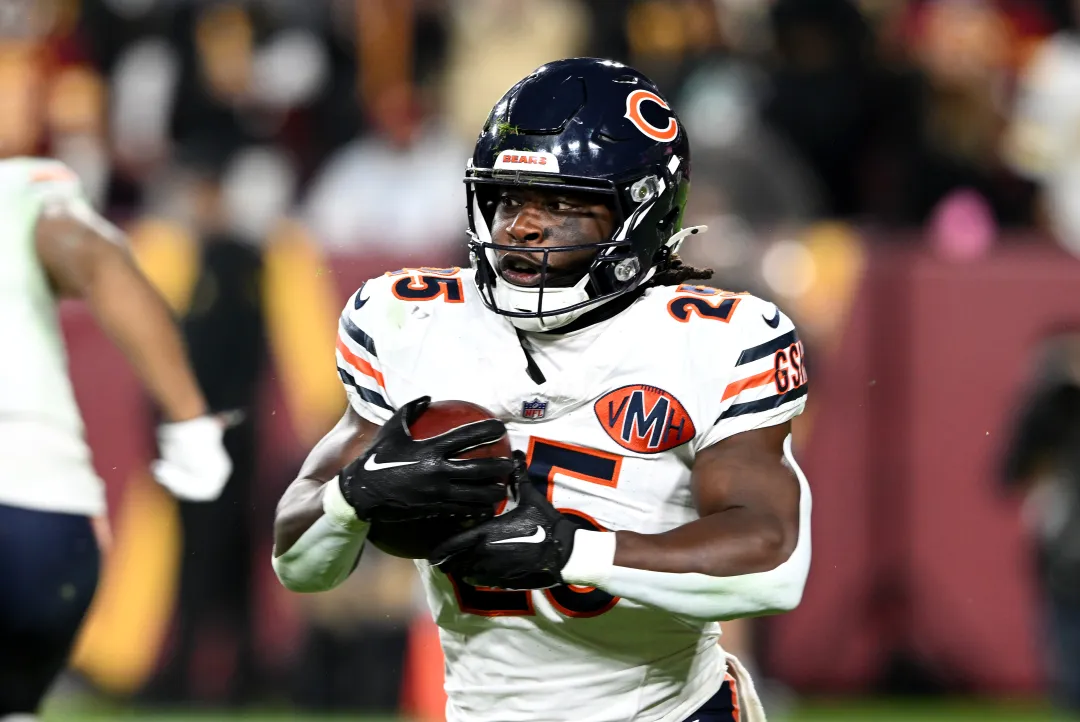
Kyle Monangai, Chicago Bears
Monangai flashed in strong stretches late in his rookie season, and he now steps into a bigger role in Ben Johnson’s offense. Johnson has a track record of feeding a complementary, goal-line-heavy back — exactly the role David Montgomery played in Detroit — and Monangai looks like this year’s version of that archetype in a Chicago offense that should take a real step forward.
Jaylen Wright, Miami Dolphins
Miami’s backfield behind De’Von Achane has been unsettled, and Wright’s explosiveness gives him real standalone upside as a change-of-pace option. If Achane were to miss any time, Wright is positioned to be the clearest beneficiary given his big-play ability and the offense’s general shootout tendencies under a new coaching staff.
Isaac Guerendo, San Francisco 49ers
Guerendo’s role has been in question with San Francisco reportedly ready to move past him, but as the direct backup to a 30-year-old Christian McCaffrey who’s never been fully insulated from injury risk, he still carries real season-saving handcuff value. Whatever touches McCaffrey leaves on the table tend to go to whoever’s next up on the depth chart, and Guerendo has shown flashes of explosiveness when given the opportunity.
Woody Marks, Houston Texans
Marks profiles as exactly the kind of later-round ZeroRB target that can turn into a weekly flex play if the depth chart opens up in front of him. He offers standalone value as a receiving-down option with real contingency upside if the presumed starter in Houston struggles to stay on the field.
Jerome Ford, Cleveland Browns
Ford has starting-caliber experience already on his résumé and sits as a clear handcuff to Quinshon Judkins, who himself is coming off a foot injury that ended his rookie season early. If Judkins’ recovery hits any snags, Ford is a proven option capable of stepping directly into lead-back volume, making him one of the safer contingency plays available in the double-digit rounds.
The bigger picture
The pattern across this group is opportunity change rather than pure talent discovery — Tuten, Brooks, Benson, and Monangai all have a clear vacancy or diminished competitor in front of them, while Mason, Guerendo, Wright, and Ford are true handcuffs whose value is tied directly to another back’s health. That mix is exactly how you want to build RB depth late in drafts: some bets on a role opening up organically, and some pure insurance policies that turn into league-winners the moment the starter in front of them gets hurt.
See today's NFL lines on DFS Lines, each one set against the player's last ten games.